Income Tax e Filing FY 2025-26: File Your ITR Online - ClearTax
Income tax e-filing has revolutionized the way Indian taxpayers manage their compliance obligations. Transitioning from complex paper forms to a streamlined digital process, the Income Tax Department has made it significantly easier for individuals, professionals, and corporate entities to submit their annual returns. Understanding the specific rules, tax payment classifications, and legal thresholds is essential to ensure a smooth, error-free submission. Filing your Income Tax Return (ITR) is not just a statutory requirement; it serves as crucial proof of income, which is indispensable when applying for loans, securing visas, or establishing financial credibility. In this comprehensive guide, we will break down the essential parameters governing mandatory tax filing in India. We will look at specific criteria under Section 139(1) and Rule 12AB that require certain individuals to file returns even if their income falls below the basic exemption limit. Additionally, we will clarify the administrative details, including the critical minor codes used during tax payments and how the Financial Year relates directly to its corresponding Assessment Year. By mastering these regulatory boundaries, you can navigate your tax filing process with total confidence and precision.
Mandatory Filing Triggers Under Section 139(1)
| Transaction Type | Threshold Limit for Mandatory ITR |
|---|---|
| Aggregate deposits in one or more current accounts during a FY | Exceeds Rs 1 crore |
| Expenditure incurred on foreign travel for oneself or any other person | Exceeds Rs 2 lakh |
| Electricity consumption expenditure incurred during a FY | Exceeds Rs 1 lakh |
Mandatory Filing Criteria Under Rule 12AB
| Category of Financial Activity | Threshold Limit for Mandatory ITR |
|---|---|
| Total business sales, turnover, or gross receipts in a FY | Exceeds Rs 60 lakh |
| Gross professional receipts in a FY | Exceeds Rs 10 lakh |
| Total aggregate deposits in savings bank accounts during a FY | Rs 50 lakh or more |
| Total TDS/TCS during the FY | Rs 25,000 or more (Rs 50,000 or more for senior citizens) |
Understanding Minor Codes for Income Tax Payments
When paying taxes online, selecting the correct code is vital to ensure that your payment is properly credited to your Permanent Account Number. The Income Tax Department categorizes tax payments into specific minor codes, which denote the exact nature of the transaction. Selecting the wrong code can lead to mismatches and unnecessary communications or notices from the tax department.
There are three key minor codes that every taxpayer should be familiar with. Minor code 100 is reserved specifically for Advance Tax payments, which are paid in installments throughout the financial year. Self Assessment Tax, which is paid at the time of filing after the financial year ends, uses minor code 300. Lastly, minor code 400 is designated for Tax on Regular Assessment, which applies when a payment is made in response to a formal assessment demand from the tax authorities.
The Alignment of Financial Year and Assessment Year
A fundamental aspect of Indian taxation is understanding the difference between the Financial Year (FY) and the Assessment Year (AY). The Financial Year is the period in which you earn your income, while the Assessment Year is the subsequent year in which that income is evaluated, declared, and taxed. This distinction ensures a structured flow for reporting and validation.
To illustrate this connection with a concrete example, let us look at the upcoming timeline. For the Financial Year (FY) 2025-26, the corresponding Assessment Year (AY) is AY 2026-27. This means all income earned between April 1, 2025, and March 31, 2026, must be reported and assessed in the tax filing cycle starting in 2026.
Filing your income tax return accurately is a critical aspect of personal and business financial discipline. By understanding the specific transaction thresholds under Section 139(1) and Rule 12AB, paying close attention to correct minor codes, and keeping track of the alignment between the Financial Year and the Assessment Year, you can ensure complete compliance and enjoy a hassle-free e-filing experience.
Frequently asked questions
Do I need to file an income tax return if my income is below the taxable limit but I spent a lot on foreign travel?
Yes, you must mandatorily file an income tax return if you have incurred expenses exceeding Rs 2 lakh on foreign travel for yourself or any other person during the financial year. This rule applies even if your total income is below the basic exemption limit of the Income Tax Act. Other similar triggers for mandatory filing include electricity bills exceeding Rs 1 lakh, depositing over Rs 1 crore in current accounts, or having a total TDS/TCS of Rs 25,000 or more.
What documents do I need to keep ready before e-filing my income tax return?
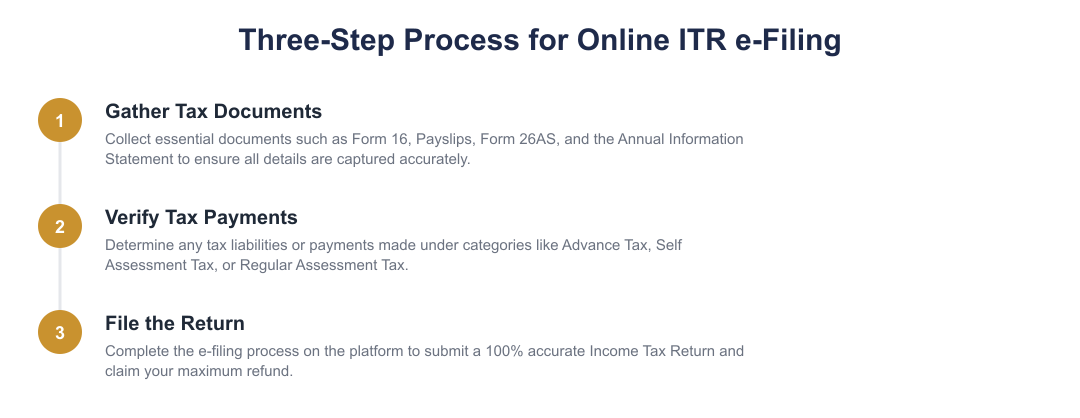
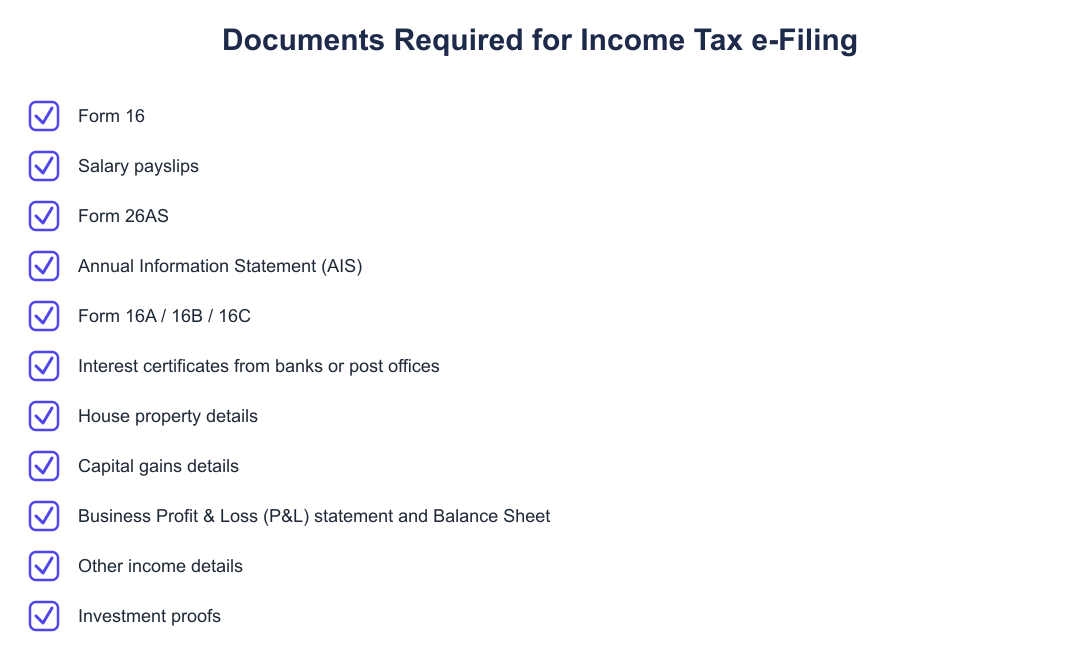
To e-file your income tax return smoothly, you should gather your Form 16, salary payslips, Form 26AS, and your Annual Information Statement. Additionally, you will need interest certificates from your banks, investment proofs for tax deductions, and capital gains statements if you sold shares or property. If you run a business or profession, you will also need your profit and loss statement alongside balance sheet schedules.
Is it compulsory to file an ITR if I deposited more than fifty lakh rupees in my savings accounts?
Yes, filing an income tax return is compulsory if your total deposits in one or more savings bank accounts aggregate to Rs 50 lakh or more during the financial year. This requirement holds true regardless of whether your taxable income falls below the exemption limit. Failing to file your return under such high-value transaction circumstances can lead to automated compliance notices from the Income Tax Department.
How does ClearTax help investors who trade in futures and options or international stocks?
ClearTax automatically computes your Short-Term Capital Gains, Long-Term Capital Gains, and business income from F&O or Intraday trading by directly importing your transaction logs. The platform supports advanced traders, cryptocurrency investors, and individuals holding US stocks or RSU/ESOPs. It ensures precise calculations of complex trading data across multiple brokers and helps you accurately report these transactions in the correct ITR form.
Do freelancers and professionals have to file an ITR if their receipts are over ten lakhs?
Yes, it is mandatory to file an income tax return if your gross professional receipts exceed Rs 10 lakh during the financial year. For business owners, a similar mandatory threshold applies if the total business turnover exceeds Rs 60 lakh. Filing is required in these scenarios even if your net taxable income falls below the standard tax-free slab after claiming business deductions.
What is the difference between Advance Tax and Self-Assessment Tax when paying online?
Advance Tax is paid in installments during the financial year under code 100 if your estimated tax liability exceeds Rs 10,000, whereas Self-Assessment Tax is paid under code 300 at the time of filing your return to clear any remaining unpaid tax. There is also Regular Assessment Tax under code 400, which is paid in response to a specific demand notice issued by the tax department. Selecting the correct tax code on the e-filing portal is essential to get credit for your payments.
Can I get a refund if there is an error in my tax return filed through ClearTax?
ClearTax offers a 100 percent accurate ITR filing guarantee, promising your money back if there is any filing error on their part. The platform also provides Notice Protection with a money-back guarantee, helping you handle any queries raised by the Income Tax Department post-filing. By capturing every financial document and ensuring all numbers are mathematically accurate, ClearTax minimizes the risk of filing errors and maximizes your tax refund.
Do I have to file an ITR if my tax has already been deducted as TDS?
Yes, you must file an ITR if your total TDS or TCS deducted during the financial year is Rs 25,000 or more, which reduces to Rs 50,000 or more if you are a senior citizen. Even though the tax is already deducted and deposited with the government, filing the return is legally required to reconcile these details with your total income. Additionally, filing an ITR is the only way to claim a refund if excess TDS was deducted from your income.
Can I hire a professional tax expert to file my income tax return on ClearTax?
Yes, ClearTax allows you to hire a dedicated tax expert from India's top tax professionals to handle your filing from start to finish. This service is highly beneficial for individuals with complex tax profiles, such as NRIs, individuals holding foreign assets, RSUs, ESOPs, or those with significant capital gains. The expert will review your documents, optimize your tax savings, and file a 100 percent accurate return on your behalf.
Need help staying Income Tax compliant?
MoneyGence's AI Finance OS tracks your compliance, wallet share, and finances in one place, built for agencies and growing businesses.
Get started with MoneyGence