MSME-1 Form: Purpose, Applicability & Compliance Guide
This guide explains the MSME-1 form in clear, practical terms so business owners, accountants and compliance teams can understand why the form exists, who typically needs to consider it, and how to prepare for filing and ongoing compliance. You will learn what the form is used for, the kinds of information it commonly requires, typical business situations that make the form relevant, and practical tips to avoid common errors. The guide focuses on actionable clarity rather than statutory citation: it helps you think through recordkeeping, internal controls and coordination between finance and operations when dealing with MSME reporting. Whether you run a micro, small or medium enterprise, or you advise them, this guide will help you build the administrative processes that make MSME-related filing a manageable, low-risk task. It also highlights frequent pitfalls, such as incomplete documentation, mismatches between books and filings, and timing issues, and suggests ways to reduce the chance of follow-up queries or rework. Read on for a structured walk-through of purpose, applicability, documentation considerations, practical compliance checks and best-practice tips for streamlining your MSME-1 response workflow.
What the MSME-1 form is and why it matters
The MSME-1 form is a reporting instrument used in the regulatory and commercial ecosystem for micro, small and medium enterprises. Its primary purpose is to capture specific information about a supplier or buyer relationship, often used to monitor payment practices and support transparency between trading partners. For businesses, timely and accurate completion of this form can be an important administrative task that supports financial planning and supplier relations.
Beyond simple compliance, the form serves an informational role: it helps businesses document the existence and parameters of transactions, which can be useful in dispute resolution, audits, and internal recordkeeping. Preparing for MSME-1 filing is therefore both a compliance exercise and an opportunity to strengthen invoicing, collections and vendor management processes.
Who should be concerned and when it becomes relevant
The form is most relevant to parties engaged in commercial supply chains where one or more participants identify as micro, small or medium enterprises. Typically, the need to complete such a form arises when there is an obligation to report certain transaction details or when a counterparty requests confirmation of MSME status and payment terms. Businesses that deal regularly with smaller suppliers or receive supplies from MSMEs should therefore have a clear internal procedure for responding when the form is required.
For advisors and compliance teams, it is important to establish a checklist for identifying transactions that may trigger the requirement to prepare or submit MSME-related information. This helps avoid last-minute information gathering and reduces the risk of discrepancies between accounting records and the details provided in the form.
Documents and records to keep ready
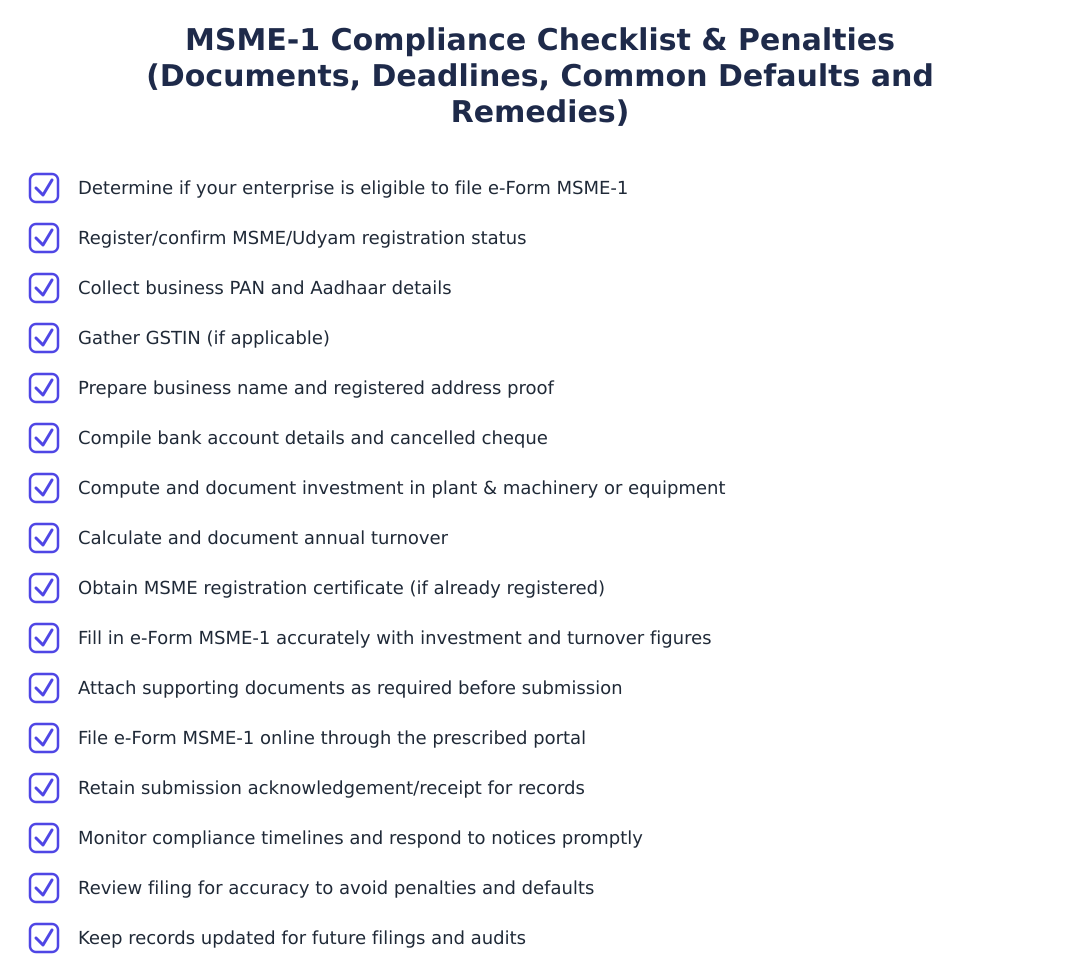
Although specific document lists can vary depending on context, good practice is to keep supporting evidence that links invoiced transactions to payments and delivery records. This usually includes a copy of the invoice, proof of delivery or acceptance of goods/services, and payment receipts or bank statements showing remittance. Having these documents indexed and easily retrievable reduces the time needed to complete any reporting form.
Maintain reconciled ledgers and a clear trail between purchase orders, invoices and payments. When multiple departments touch a transaction (procurement, stores, finance), set up a simple internal sign-off process so a single point of contact can compile and verify the information needed for the form.
Common pitfalls and how to avoid them
A frequent challenge is mismatched information between accounting books and what is provided on the form. To avoid this, reconcile relevant accounts before filling the form and cross-check key fields such as invoice numbers, dates and amounts against source documents. Small inconsistencies often lead to follow-up queries that consume time and distract from core business tasks.
Another issue is delayed preparation. Put reminders and a simple workflow in place so that the person responsible for vendor management or accounts payable knows when to gather documents and who signs off. Clear internal deadlines and ownership reduce the risk of hurried, inaccurate submissions.
Practical compliance tips and internal controls
Assign one person or team to be responsible for MSME-related filings and queries. This central point of contact should own the checklist of documents, maintain templates for commonly requested information, and coordinate with procurement and finance to ensure consistency. Centralising responsibility reduces duplicated effort and makes it easier to implement quality checks.
Implement simple internal controls such as a verification checklist and a two-step review (preparation and independent review). Automate where possible: use accounting software to tag MSME transactions and generate reports that feed directly into the form. These steps lower the effort required for each filing and improve accuracy.
Familiarity with the purpose and practical requirements of the MSME-1 form, combined with good document management and clear internal processes, makes compliance straightforward and reduces commercial friction with suppliers. Treat the form as an opportunity to tighten invoicing, payment tracking and vendor communication, doing so will minimize errors and save time during regulatory or contractual reporting.
Frequently asked questions
What is e-Form MSME-1 and why is it used?
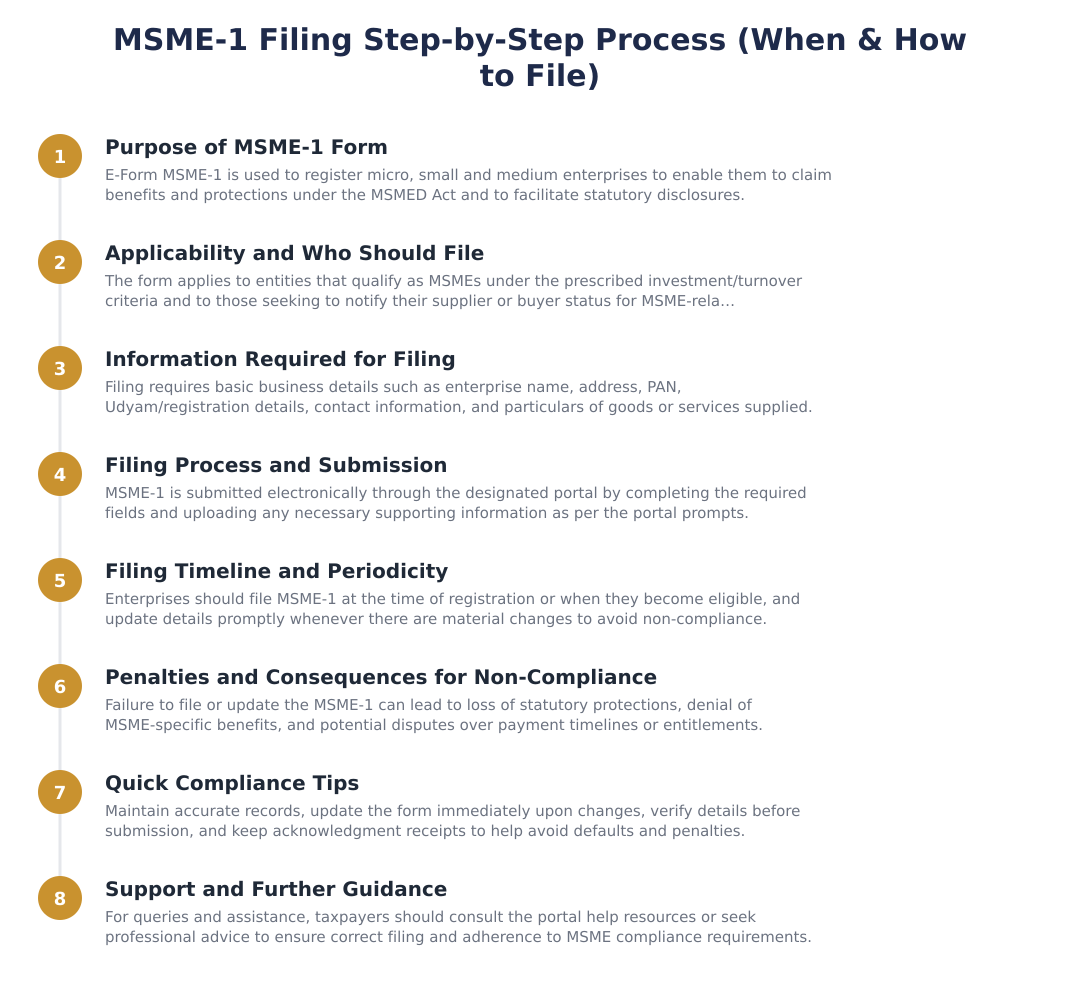
E-Form MSME-1 is an online complaint/statement form used by micro, small and medium enterprises to report delayed payments by buyers and to seek conciliation or recovery under the MSME dispute resolution framework. The form captures invoice details, contract terms, outstanding amounts and payment history so the seller can document the default and initiate the statutory process. Filing MSME-1 on the government portal creates an official record that can be used for conciliation, mediation or subsequent legal steps if the buyer still does not pay. It is not a tax return but a grievance mechanism focused on payment recovery and enforcement of timely payments to MSMEs.
Who must file Form MSME-1, the supplier or the buyer?
The supplier (micro, small or medium enterprise) who has not received payment from a buyer is the party required to file Form MSME-1. Buyers do not file this form; the purpose is to enable sellers to register defaults and seek remedies under the MSME dispute resolution process. Only the party owed the payment should submit the invoice and supporting documents to prove the debt, and the form must reflect the contract terms and date of supply or deemed acceptance. If multiple invoices or buyers are involved, the supplier may have to file separate entries or a consolidated statement as permitted on the portal.
When should an MSME file MSME-1 for delayed payments?
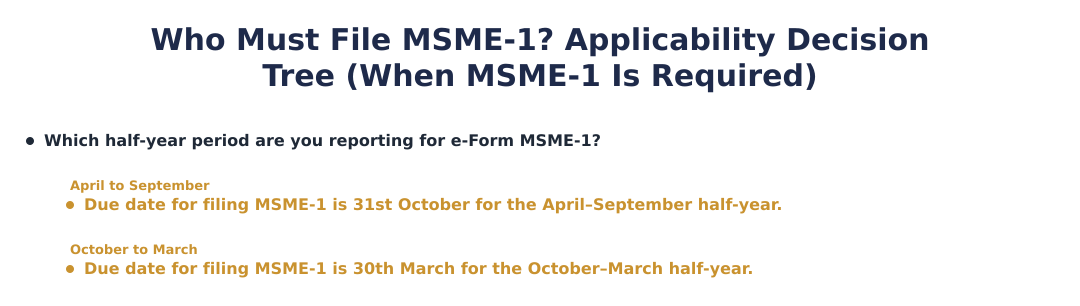
An MSME should file MSME-1 after the payment due date has lapsed, typically after 45 days from the date of acceptance of goods or services if no other payment period is contractually agreed. The MSME Development Act presumes 45 days as the statutory payment period unless the parties have a different agreed term in writing, so you should wait until that period expires before lodging a formal complaint. Early filing before the due period may be rejected, while delayed filing could weaken evidence, so keep clear records of invoice dates, acceptances and reminder notices. Also preserve correspondence and bank records to support the filing and speed up conciliation.
What documents and information do I need to attach when filing MSME-1?
When filing MSME-1 you should attach the original invoice(s) or bills, the purchase order or contract, delivery challans or proof of acceptance, communication records (emails/letters/ reminders) and bank/payment statements showing non-payment. The form requires particulars such as buyer’s name and address, invoice number and date, amount due, payment terms, and a concise statement of facts explaining the default. Accurate supporting documents speed up conciliation and provide the basis for any claim for interest or compensation, so include clear copies and maintain originals for legal steps if necessary.
How do I file MSME-1 step-by-step on the portal?
To file MSME-1 you must register or log in on the designated MSME grievance portal, choose the MSME-1 e-form, fill in supplier and buyer details, enter invoice/contract particulars and upload supporting documents, then submit and note the reference/acknowledgement number. After submission the portal typically issues an acknowledgement and may trigger a conciliation or hearing process managed by the concerned authority; keep the reference safe for follow-up. If you face technical issues, use the portal’s helpdesk or FAQs and keep screenshots of errors; many portals also allow authorised representatives or advocates to file on behalf of the MSME with proper authorization.
What remedies can I get after filing MSME-1 for non-payment?
After filing MSME-1 the primary remedies available are conciliation or mediation facilitated by the authority, negotiation to secure payment, and referral to recovery or legal proceedings if conciliation fails; the process creates an enforceable record of the claim. Filing also allows the claimant to seek interest on delayed payment and any contractually agreed damages; if parties cannot settle, the authority may refer the matter for arbitration or court action depending on the scheme. MSME-1 itself is a dispute registration mechanism rather than an instant enforcement order, so timely follow-up and legal advice can help convert the claim into recoverable relief.
Are there penalties for buyers who delay payments and how are they calculated?
Buyers who delay payments to MSMEs are liable to pay interest on the overdue amount from the day after the due date until payment, and the supplier can claim this interest when they register the dispute; the statutory provisions prescribe interest though the exact rate may depend on the prevailing rules or agreement. In practice, suppliers commonly claim interest and compensation through the MSME dispute mechanism and can also pursue contractual remedies; the conciliation or court/arbitral process determines the final amount. There is no automatic criminal penalty simply for delay, but continuing defaults can attract enforcement actions and recovery proceedings under the MSME framework.
What happens if I don’t file MSME-1, are there disadvantages?
If you do not file MSME-1 you lose the formal dispute-resolution pathway that documents the default and potentially enables faster conciliation or referral for recovery, making enforcement more cumbersome. Without the MSME-1 record you may have to rely solely on ordinary civil suits or arbitration, which can be costlier and slower; the statutory mechanism often prioritises MSME claims and encourages settlement. Failing to file also limits your ability to claim statutory interest or compensation under the MSME dispute framework, so it is generally advisable to use the e-form when an eligible payment is overdue and amicable resolution has failed.
What are quick practical tips to avoid defaults and strengthen an MSME-1 filing?
To avoid defaults and strengthen any MSME-1 filing, agree clear payment terms in writing (specify number of days), issue tax-compliant invoices promptly, obtain written acceptance or delivery proofs, email regular payment reminders and retain all correspondence and bank records. Also get written amendments to payment terms if buyers request changes, use advance payments or stage payments in large contracts, and register on the MSME grievance portal early so you can file quickly if needed. Detailed and chronologically organised documents make conciliation faster and improve prospects for recovery if you must escalate the claim.
Need help staying MSME compliant?
MoneyGence's AI Finance OS tracks your compliance, wallet share, and finances in one place, built for agencies and growing businesses.
Get started with MoneyGence