ISO Certification Process in India: Step-by-Step Guide
This guide explains the practical steps and considerations involved in obtaining ISO certification in India. Whether you are a small business or a large enterprise, understanding the certification journey helps you plan resources, align internal processes, and select the right external partners. The guide will walk you through the prerequisites to consider before starting the certification process, how to choose the correct type of ISO standard for your business objectives, what to look for when selecting a certification body, the typical stages of the certification audit cycle, and factors that influence cost and timeline. You will not find rigid timelines or fixed fees here; instead, the focus is on the actions and decisions that determine how smoothly your certification effort proceeds. By the end of this article you will understand what preparation is required internally, the role of documentation and internal audits, how the external audit unfolds, and why ongoing surveillance is part of maintaining certification. This knowledge will help you reduce surprises during the process, communicate requirements to stakeholders, and set realistic expectations with an accredited certifying partner.
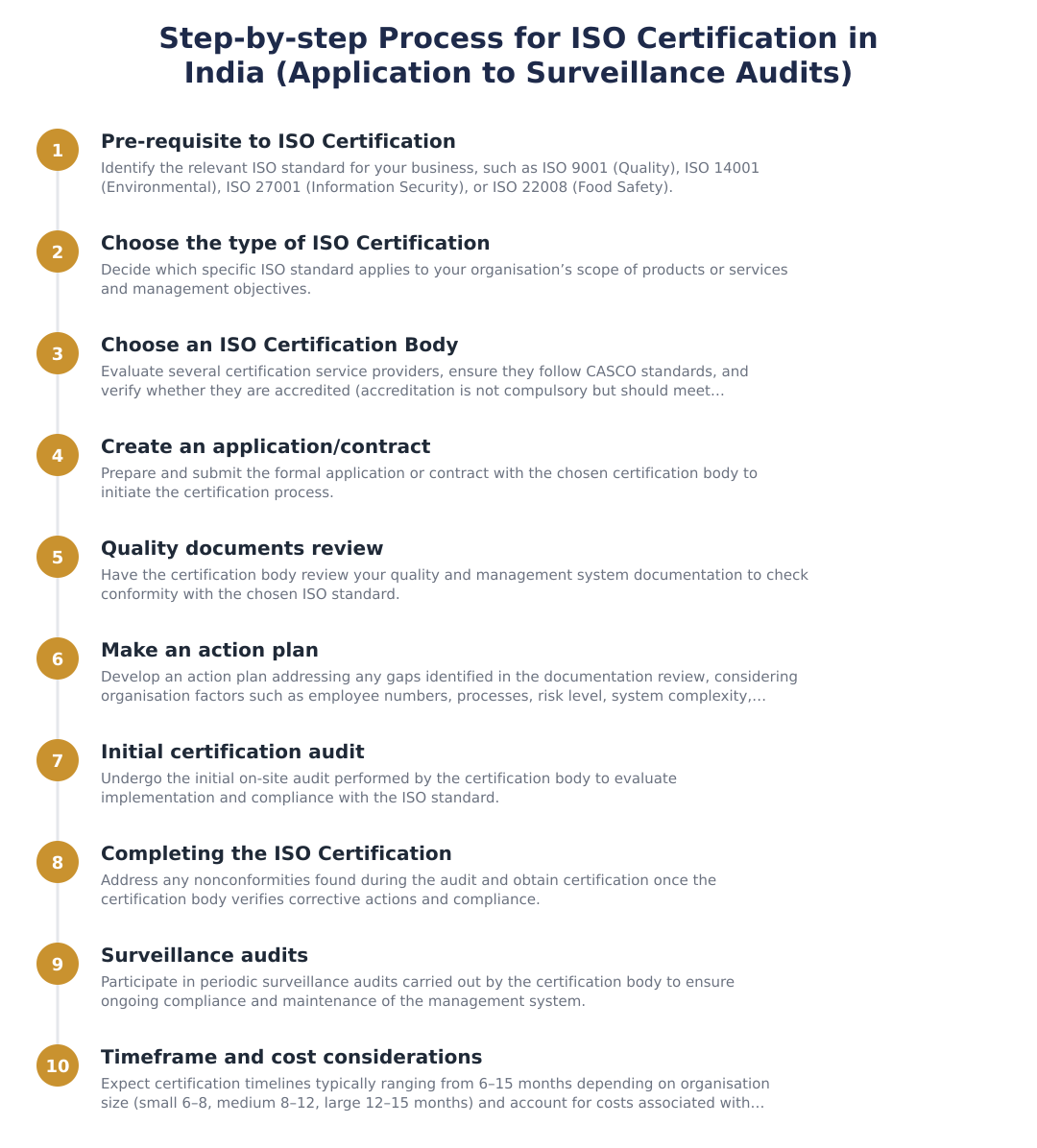
Pre-Requisite to ISO Certification Process in India
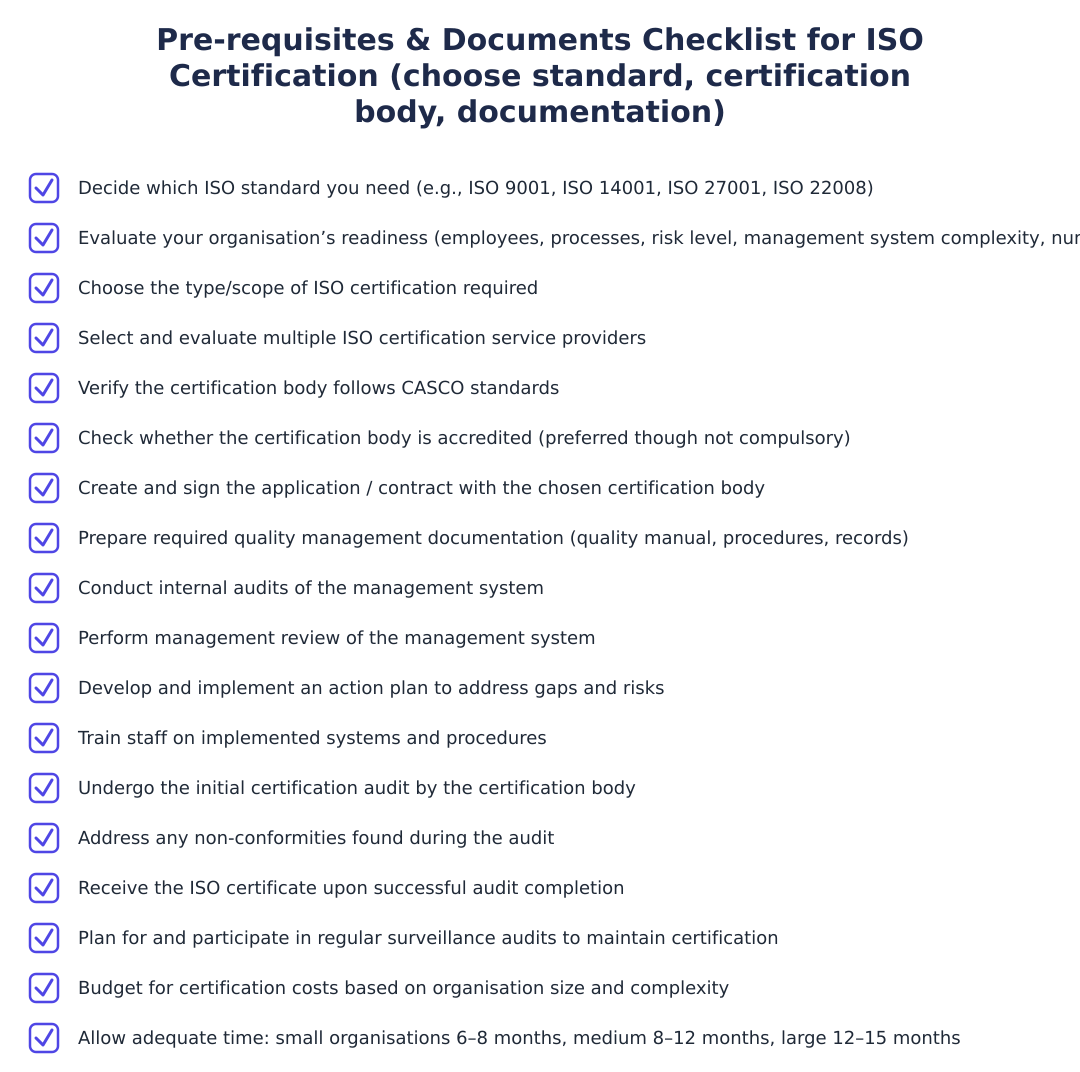
Before engaging a certification body, organisations should ensure they have clear objectives for seeking certification and an internal commitment to meeting the standard’s requirements. This typically involves senior management buy-in, allocation of necessary resources, and an understanding of the scope of certification that best reflects the organisation’s activities.
Preparation also means having a basic management framework in place: defined roles and responsibilities, documented key processes, and some form of internal monitoring. These foundational elements let an organisation demonstrate consistent operation and continuous improvement, which are central themes in most ISO certification schemes.
Finally, organisations should identify any legal or regulatory obligations related to their operations so these can be integrated into the management system. Early identification of these obligations reduces the chance of nonconformities during external assessment and supports long-term compliance.
Choosing the type of ISO Certification
Selecting the right ISO standard depends on your organisation’s objectives and the risks and opportunities you want to manage. Different standards focus on different aspects of business operations, from overall quality management to domain-specific risks. Choose a standard whose requirements align with your strategic goals so the certification delivers tangible business value.
When evaluating which standard to pursue, consider how it will integrate with your existing systems and whether your customers, suppliers or regulators expect or prefer a particular certification. Also assess internal readiness: some standards require detailed documentation and specialized controls, so be realistic about your ability to implement and maintain those requirements.
It can be useful to consult stakeholders, including process owners and external advisors, to understand the practical implications of each standard. A careful choice upfront prevents wasted effort and helps ensure the certification supports operational improvements rather than becoming a checkbox exercise.
Choosing an ISO Certification Body
Selecting an appropriate certification body is a critical decision. Organisations should evaluate providers on criteria such as reputation, experience in the relevant sector, and the competence of their auditors. A good certification body will explain the audit process clearly, provide a transparent quote, and communicate realistic expectations about timelines and resource needs.
Accreditation status and impartiality are important considerations. Some certification bodies may be accredited by recognised accreditation entities; others may operate without accreditation. Understanding the implications of accreditation for credibility and market recognition helps in making an informed choice.
Finally, verify practical aspects such as geographical reach, language capability of auditors, and post-certification support. The right partner will not only conduct the audits but also help you understand nonconformities and the pathway to corrective actions.
Process for ISO Certification in India
Submit an application to the chosen certification body and agree the scope, fees, and terms. This formalises the intent to undergo certification and sets the administrative basis for the audit engagement.
Provide the certification body with your documented management system for review. The auditors will assess whether your documentation meets the applicable requirements and whether it accurately reflects your operational practices.
Based on the document review and internal assessments, prepare an action plan to address gaps and allocate responsibilities and timelines for corrective actions before the on-site audit.
The external audit typically includes an on-site evaluation where auditors verify implementation of the management system, interview personnel, and review records. Findings are classified and communicated for corrective action where necessary.
Once any identified nonconformities are addressed to the satisfaction of the certification body, certification is granted. The organisation receives formal documentation confirming the scope and validity of the certificate.
After certification, periodic surveillance audits assess continued conformity and effectiveness of the management system. These audits help ensure ongoing compliance and drive continual improvement.
Cost involved in the ISO Certification Process
Cost is influenced by several factors, including the size and complexity of the organisation, the scope of certification, the number of sites, and the chosen certification body. Quotes from multiple providers help you compare services and understand what is covered by the fee.
Beyond the certification body’s charges, organisations should account for internal costs such as staff time for documentation and implementation, any consultancy fees if external help is used, and costs associated with corrective actions. Thinking in terms of total cost of ownership helps avoid surprises and supports budgeting.
Time involved in the ISO Certification Process
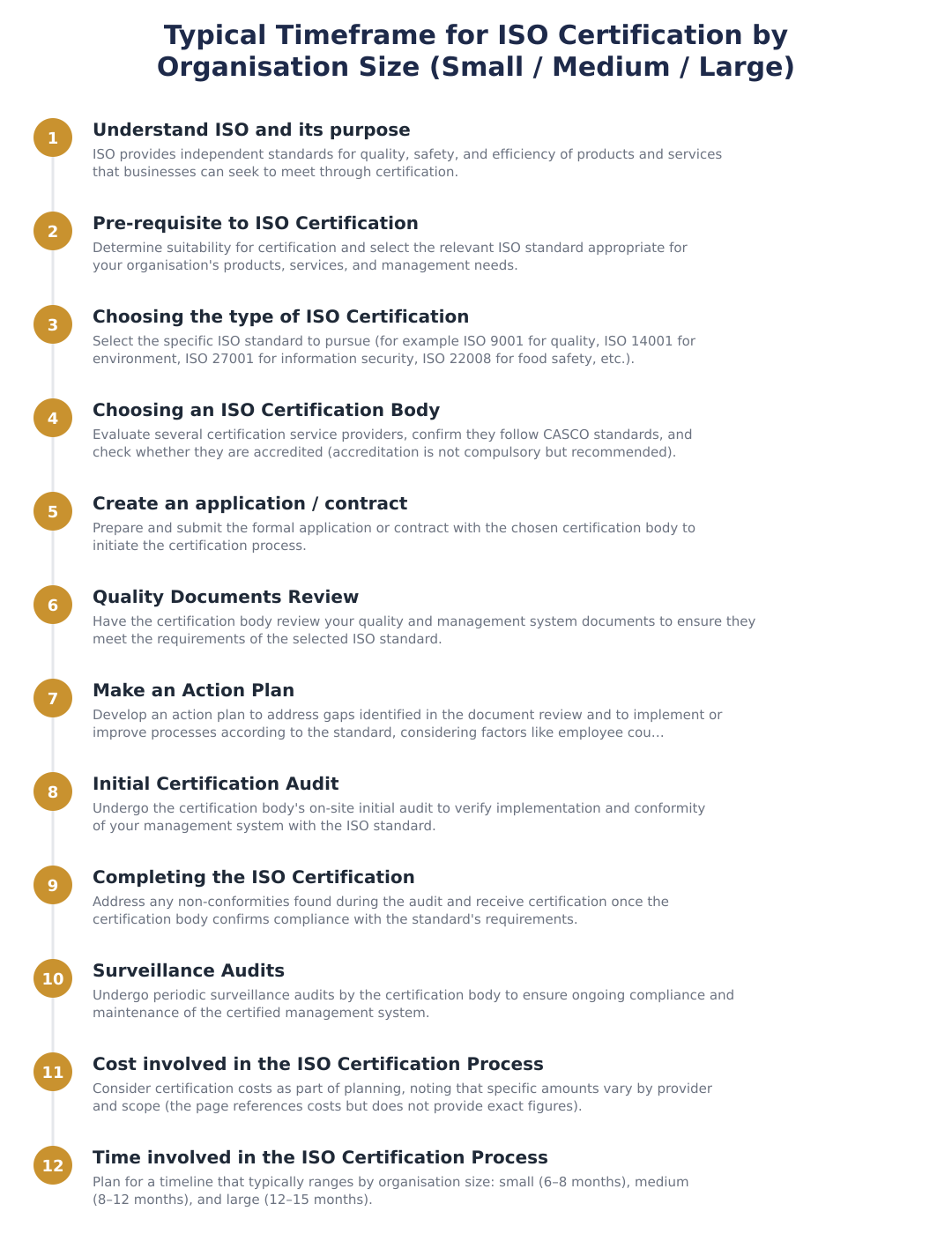
The timeline for certification varies according to organisational readiness, the complexity of processes, and the availability of auditors. Some organisations progress rapidly when they have mature management systems, while others require more time to document processes and close gaps identified during audits.
To manage the timeline effectively, plan internal milestones, maintain regular communication with the certification body, and treat corrective actions as a priority. Building time buffers for unexpected issues helps meet target dates without compromising on the quality of implementation.
ISO certification is a strategic initiative that requires planning, commitment, and ongoing effort. By understanding the prerequisites, choosing an appropriate standard and certification body, following a structured audit process, and preparing for the costs and timelines involved, organisations can use certification to improve processes and demonstrate conformity to stakeholders. Careful preparation and active management of the certification journey increase the likelihood of a smooth assessment and lasting benefits.
Frequently asked questions
What is the first step to get ISO certification in India?
The first step to get ISO certification in India is to choose the type of ISO standard relevant to your business and ensure you meet basic pre-requisites. Common standards include ISO 9001:2008 for Quality Management, ISO 14001 for Environmental Management, ISO 27001 for Information Security Management and ISO 22008 for Food Safety Management; pick the one that matches your products/services. You should also assess your organisation’s size, processes and risk level to determine readiness and scope before approaching a certification body. Finally, prepare to create an application/contract with the chosen certification body once the scope is clear.
How do I choose the right ISO certification body in India?
Choose an ISO certification body by evaluating several providers and checking whether they follow CASCO standards and meet requirements of accreditation bodies, even though accreditation is not mandatory. Compare their experience in your industry, auditor qualifications, fees and customer references, and ensure the scope they offer matches your organisational needs. Request details about their audit approach, timelines and any post-audit support to avoid surprises during certification. If possible, prefer a body with accreditation from a recognised national accreditation body to increase credibility with customers.
What documents will the ISO certification body review during certification?
The ISO certification body will review your quality and management system documents as part of the certification process, including policies, procedures, records and any documented processes that demonstrate compliance with the chosen ISO standard. This review verifies that documented systems meet standard requirements and identifies gaps to be closed before the full audit. Expect the document review to cover scope, responsibilities, process descriptions, and evidence of implementation such as records or performance data. The document review step often precedes the initial on-site certification audit.
What does creating an action plan for ISO certification involve?
Creating an action plan for ISO certification involves mapping out corrective actions, timelines and responsibilities to address gaps found in the document review and initial assessments. The plan should list tasks (such as updating procedures, training staff, and implementing controls), assign owners, set deadlines, and include measures to verify effectiveness. A clear action plan helps coordinate resources so the organisation is audit-ready by the time of the initial certification audit. Follow-up verification (internal audits or management reviews) is typically included to confirm readiness.
What happens during the initial certification audit for ISO?
During the initial certification audit, auditors from the chosen certification body conduct on-site checks to verify that your documented management system is implemented and effective across the scope of certification. The audit examines processes, interviews staff, and reviews records to confirm conformity to the ISO standard and to identify any non-conformities that must be corrected. If major non-conformities are found, corrective actions must be completed and verified before certification is granted; minor findings typically require documented corrective actions. Successful completion of this audit leads to issuance of the ISO certificate once all identified issues are closed.
How long does the ISO certification process take in India?
The ISO certification process in India typically takes 6–15 months depending on organisation size and complexity: small organisations usually take 6–8 months, medium organisations 8–12 months, and large organisations 12–15 months. Time required depends on factors such as number of employees, number of processes, complexity of the management system, level of risk in the scope of services and number of working shifts. These timelines cover initial documentation, implementation, audits and closure of corrective actions up to certification. Faster timelines are possible if the organisation already has well-documented and implemented systems.
What are surveillance audits and how often are they done after certification?
Surveillance audits are periodic audits carried out by the certification body after initial certification to confirm continued compliance with the ISO standard and effectiveness of your management system, and they are typically done annually during the three-year certification cycle. These audits focus on selected areas of the management system and on verifying corrective actions from previous audits. Passing surveillance audits is required to maintain the certification for the full validity period; failure can result in suspension or withdrawal of the certificate. Additionally, a recertification audit is normally required at the end of the three-year cycle to renew the certificate.
What factors determine the cost of ISO certification in India?
The cost of ISO certification in India depends on factors like number of employees, number of processes, complexity and risk level of the management system, number of working shifts, and the chosen certification body’s fees. Costs include pre-certification consultancy (if used), document preparation, internal audits, and the certification body’s fees for document review, initial audit and surveillance audits. Since accreditation is optional for certification bodies, prices can vary significantly, accredited bodies may charge more but add credibility. Obtain detailed quotes from multiple certification bodies and compare what services and audit days are included.
How do I complete the ISO certification after the initial audit?
You complete ISO certification by closing all identified non-conformities from the initial audit and having the certification body verify corrective actions, after which the certificate is issued. The typical steps are: receive the audit report, implement corrective actions for major and minor findings within agreed timelines, submit evidence to the certification body, and pass their verification review. Once verified, the certification body issues the ISO certificate covering the agreed scope and organisation; after that you enter the surveillance audit cycle to maintain the certificate. Keep records and continue internal reviews to ensure ongoing compliance.
Need help staying Compliance compliant?
MoneyGence's AI Finance OS tracks your compliance, wallet share, and finances in one place, built for agencies and growing businesses.
Get started with MoneyGence