How to Reply to Demand Notice DRC-06 | GST Portal Guide
This guide explains what a taxpayer should know when they receive a GST demand notice (commonly referred to by practitioners as DRC-06) and how the adjudication framework under Sections 73 and 74 of the GST law shapes the process. You will learn the legal distinction between the two sections, the statutory time limits within which a tax authority can adjudicate a demand, and practical, compliance-focused guidance on viewing notices, preparing a reply, and following up after an order is issued. Knowing these basics helps registered persons respond promptly and strategically, reducing the risk of adverse orders, ensuring evidence is preserved, and preserving rights such as requesting hearings or seeking rectification where appropriate. The guide does not replace professional advice for complex disputes, but it will help you understand the key legal categories that determine how a demand is handled, the statutory timelines that limit the authority’s power to adjudicate, and the practical next steps most taxpayers should take on receipt of a notice. Read on for clear, actionable guidance about how the nature of the alleged shortfall (whether it falls under Section 73 or Section 74) affects the process and what practical precautions to take immediately after receiving a demand notice.
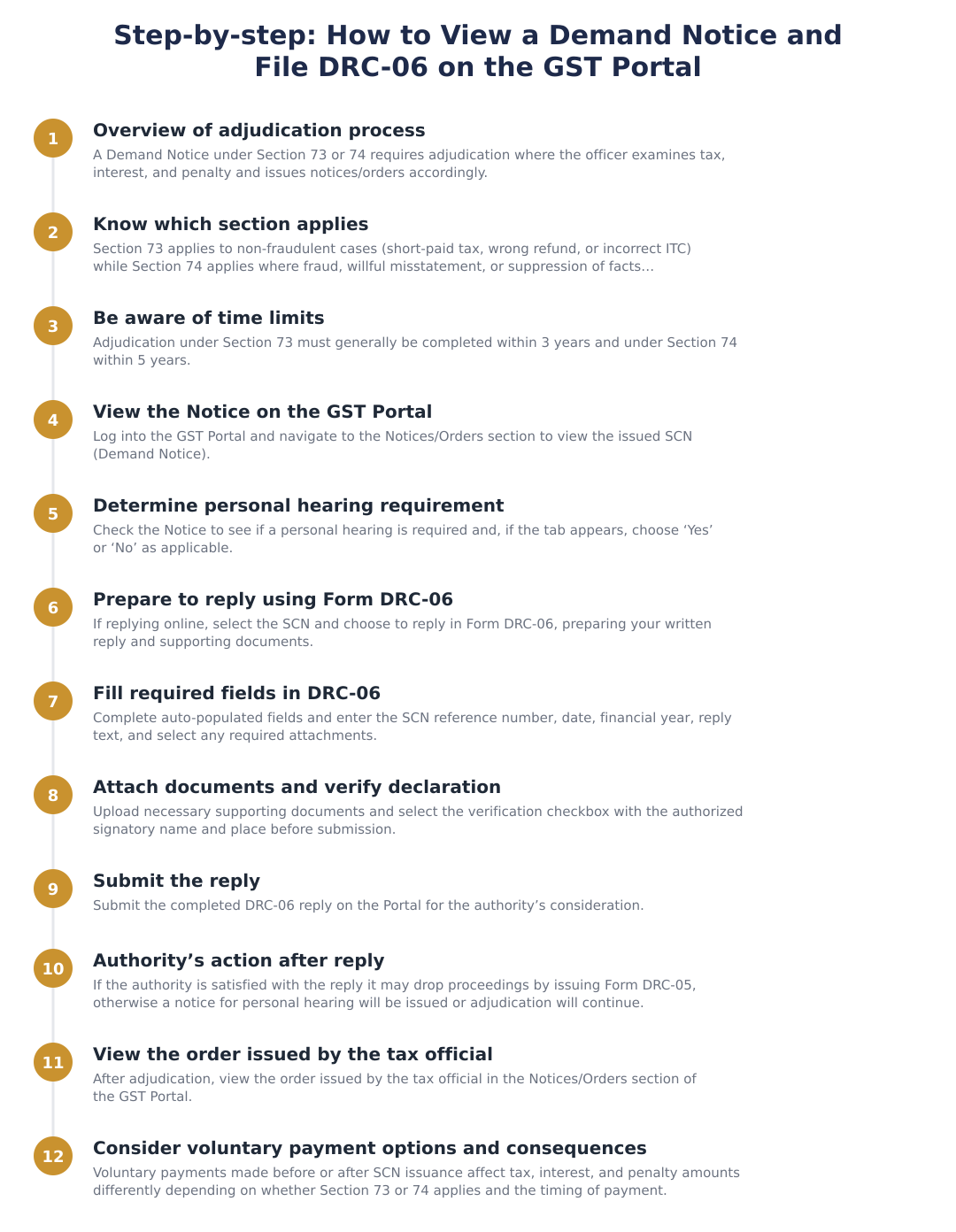
Overview of the process of adjudication
Adjudication in the GST context is the formal process by which a tax authority examines alleged short payment, wrongful refund or incorrect availing/utilisation of input tax credit and reaches a reasoned conclusion. The allegations in a notice determine the legal pathway: whether the matter is treated as non-fraudulent or involves fraud or willful misstatement. That legal distinction shapes the authority’s approach to evidence, investigation and possible penalties.
Section 73 and Section 74 are the two primary statutory gateways used for adjudication of tax demand. Section 73 covers cases where the tax shortfall arises for reasons other than fraud, willful misstatement, or suppression of facts; Section 74 applies where the shortfall is alleged to be due to fraud, willful misstatement or suppression. Understanding which section is invoked is the first crucial step, because it affects both the substantive legal character of the case and some aspects of how the authority will proceed.
Time limit for adjudicating the case under Section 73 and Section 74
Statutory time limits constrain how long the tax administration has to adjudicate a matter. These limits matter because, if the authority begins adjudication after the applicable period has expired, the taxpayer may have grounds to challenge action as time-barred. Time limits therefore create certainty for businesses and a practical impetus to review historic records promptly when a notice arrives.
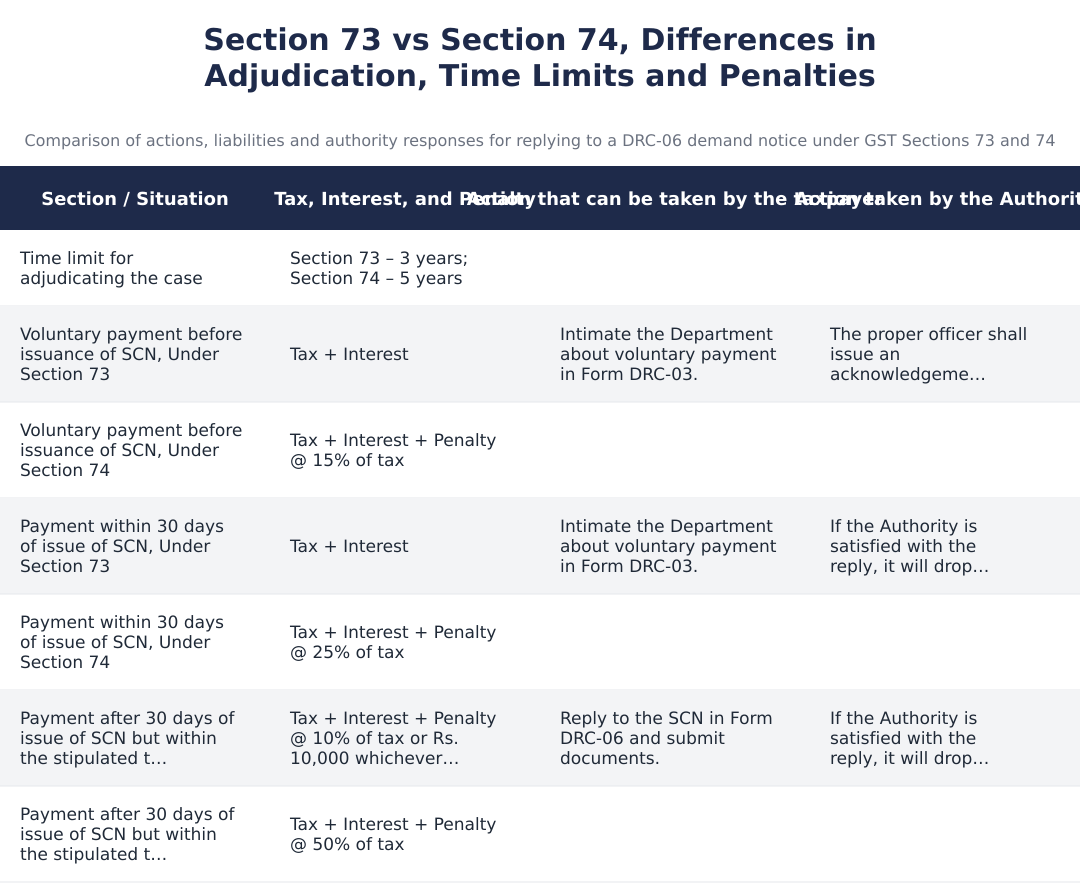
For Section 73 matters (those not involving fraud, willful misstatement or suppression), the time limit for adjudication is three years. For Section 74 matters (those involving allegations of fraud, willful misstatement or suppression), the time limit for adjudication is five years. When a notice cites one of these sections, check the relevant periods against the dates in your records and the supply/return periods under scrutiny to understand whether the authority’s action falls within the statutory window.
How to view a Notice on the GST Portal?
Notices are typically made available to the taxpayer through the official GST portal or sent by the tax department’s designated communication channels. The first practical step on receipt of any communication is to authenticate its source, confirm it is issued by the tax authority and not a scam, and then access the full text of the notice to note the allegations, the period under scrutiny, and any deadline mentioned for responding.
When you view the notice, identify the statutory provision relied upon (for example, whether it invokes Section 73 or Section 74) and the time periods and tax heads alleged to be deficient. Even if you plan to consult a tax professional, assemble primary documents (returns, ledgers, invoices and any correspondence) promptly so you can provide an accurate factual reply within any stipulated timeframe.
How to reply to a Notice on the GST Portal (DRC-06)?
A formal reply to a demand notice should be factual, supported by documentary evidence, and focused on addressing each allegation made in the notice. State your position clearly: whether you accept the claim in whole or in part, whether you dispute it and on what grounds, and supply corroborating documents such as invoices, payment challans, reconciliations, or legal interpretations where relevant.
If the notice invites a personal hearing or allows submission of additional material, consider whether you need professional representation. Maintain a clear chronology and highlight reconciliations that demonstrate the correctness of your returns. Always preserve proof of having submitted a reply and any attachments, and keep copies of acknowledgements from the portal or department for future reference.
How to view an order issued by tax official?
After adjudication, the tax officer issues an order setting out findings and any amounts payable or actions to be taken. Orders are also communicated through the official portal or by formal departmental communication. Review the order carefully to understand whether the authority has accepted your reply, modified the demand, or imposed any other administrative directions.
If the order is adverse or contains directions you were not expecting, note any timelines for compliance, payment or appeal mentioned in the order text. Early engagement with a tax advisor is advisable to evaluate options such as seeking rectification or filing an appeal where legally permissible and relevant to your facts.
Frequently Asked Questions
Q: After issuance of an order, should a tax officer issue a recovery notice? A: Whether a separate recovery notice follows depends on the department’s practice and the contents of the order. An order may itself direct payment or specify further action; in many cases the administration issues recovery or demand communications if amounts remain unpaid. Assess the order to determine whether further departmental steps are anticipated.
Q: Can an Order be rectified? A: Orders sometimes contain clerical errors or require correction of minor mistakes; the availability and procedure for rectification depend on statutory provisions and departmental rules. If you identify an apparent error in an order, consult a tax professional promptly to understand the appropriate remedy and timelines applicable in your situation.
Receiving a GST demand notice is a serious event but not necessarily the end of the road. Identify whether the notice falls under Section 73 or Section 74, check statutory time limits, assemble supporting documents and submit a clear, evidence-backed reply. Where orders are adverse, act promptly to understand compliance, rectification or appeal options. Consult a qualified tax advisor for complex disputes or where fraud or willful misstatement is alleged.

Frequently asked questions
How do I view a Demand Notice (SCN) on the GST portal?
Log in to the GST Portal and go to Services > User Services > View Additional Notices/Orders > Case Details to view Demand Notices (SCNs). From the Case Details page click View under the relevant case and use the Attachments download link to open the notice; all notices and orders issued to the taxpayer are listed there. This view shows the SCN reference, date and attached documents so you can download and save the notice for replying or filing. If you cannot find a notice, check with your DSC/EVC settings or contact the tax office as sometimes notices are issued but not visible due to technical or access issues.
How do I reply online to a Demand Notice using Form DRC-06 on the GST portal?
To reply online, open the Case Details page for the SCN and click the Replies tab, then Add Reply and choose ‘Reply’ to open Form DRC-06 where you enter your response and attach documents. Fill in the displayed fields (SCN ref no., date of SCN, financial year), indicate whether you want a personal hearing if the issuing authority hasn’t already called one, upload supporting attachments, select the declaration and authorised signatory, preview and then File using DSC or EVC. After filing the status changes from ‘Pending for reply by the taxpayer’ and the proper officer will review your reply and either drop proceedings (Form DRC-05) or issue a personal hearing notice. Keep copies of the filed DRC-06 and attachments and note any timelines specified in the SCN for further action.
What fields do I need to fill when replying to a notice in Form DRC-06?
In Form DRC-06 you must complete the auto-populated fields (Type, SCN Ref No., Date of SCN, Financial Year), indicate Personal hearing requirement (Yes/No where applicable), enter the Reply text, upload Attachments, and complete Verification by ticking the declaration, selecting the authorised signatory and entering the place. The Personal hearing option appears only if the issuing authority has not already called for one in the SCN. Ensure attachments are in permitted formats and the authorised signatory matches the GST registration to avoid rejection. After filling, preview and file using DSC or EVC to submit the reply formally.
What are the time limits for adjudication under Section 73 and Section 74 of the GST law?
The adjudication time limit under Section 73 (non-fraud cases) is 3 years from the relevant date, and under Section 74 (fraud, willful misstatement or suppression of facts) it is 5 years. These limits determine how far back the tax authority may issue an SCN and adjudicate tax, interest and penalty liabilities. If the assessing officer issues a show-cause notice within these prescribed periods, the case proceeds; otherwise claims of time-bar may be raised as a defence. Note that specific facts and triggering dates matter, so verify the relevant assessment period and issuance date of the notice when considering limitation.
If I voluntarily pay tax before issuance of an SCN, what happens and which form do I use?
If you voluntarily pay the tax and interest before an SCN is issued, intimate the department using Form DRC-03 and the proper officer will acknowledge payment in FORM GST DRC–04; if satisfied, the officer may not issue a notice. For non-fraud cases under Section 73 the liability is tax plus interest; for fraud cases under Section 74 you must pay tax, interest and a penalty (generally 15% of tax for voluntary pre-SCN payment). Voluntary payment can help avoid further adjudication but ensure you file DRC-03 promptly and retain the DRC-04 acknowledgement issued by the officer. The acceptance is at the discretion of the proper officer, so maintain full documentary evidence when making voluntary payments.
If I reply to the SCN within 30 days, can the authority drop the proceedings?
Yes, if you reply and make the required payment within 30 days of the SCN under the specified conditions, the authority may drop the proceedings and issue an order (Form DRC-05) if satisfied with your reply. For example, under Section 73 payment within 30 days may require tax plus interest and can lead to dropping proceedings; under Section 74 payment within 30 days attracts tax, interest and penalty typically at 25% of tax. If the authority is not satisfied, they may instead issue a notice for personal hearing and continue adjudication. Always file the reply (DRC-06) and supporting documents promptly and retain evidence of payment to aid the authority’s decision.
Can I pay admitted tax dues in instalments under GST after receiving an order?
Yes, payment in instalments can be allowed but it depends on the recovery provisions and the discretion of the tax authority; instalment arrangements are not an automatic right. The GST recovery framework provides various recovery modes, and officers may permit staggered payments in genuine hardship cases, subject to conditions and timelines set by the officer. You must apply to the proper officer and obtain written approval for instalments, and continue to comply with any conditions such as security or fixed instalment dates. Failure to adhere to the instalment schedule can lead to recovery actions like attachment of property or bank accounts as permitted under law.
Can an order issued under GST (after SCN) be rectified or corrected?
Yes, an order can be rectified by the proper officer to correct apparent errors in computation, clerical mistakes or mistakes apparent on the face of the record. Rectification is limited to bona fide errors and does not permit changing findings of fact that require a fresh adjudication; the officer issues a rectified order after following prescribed procedures. If you believe an order contains errors, you can request rectification or file representations; for substantive disputes, appeal remedies under the GST appellate framework may be more appropriate. Keep copies of the original order and any communication to support your rectification request.
What are the common modes of recovery under GST if tax, interest or penalty remains unpaid?
Common recovery modes under GST include issuing a recovery notice, attachment of bank accounts and property, arrest and detention in extreme cases, and forfeiture of security; the proper officer follows the statutory recovery process. The officer may issue a recovery notice after issuing an adjudication order and, depending on the case, initiate attachment of movable or immovable property, direct deducting amounts from government dues, or invoke other enforcement provisions. Taxpayers should respond to recovery notices promptly, seek instalment arrangements if facing hardship, and avail appeal remedies where appropriate to stay or challenge recovery actions. Recovery steps are progressive and must follow procedure, so early compliance or negotiation often prevents aggressive enforcement measures.
Need help staying GST compliant?
MoneyGence's AI Finance OS tracks your compliance, wallet share, and finances in one place, built for agencies and growing businesses.
Get started with MoneyGence