GSTIN Number - Format, Example, Benefits & How to Apply
This guide explains what a GSTIN number is, how its format is structured, who must obtain one, what documents are required at registration, how to verify a GSTIN on the official portal, and the practical benefits of having that registration. For any business operating under India’s GST system, understanding GSTIN is essential because it is the digital identity used for all GST compliance. You will learn to read the 15‑character GSTIN to identify the state and PAN details embedded in it, recognise when registration is mandatory, prepare the right documents for application, verify a counterparty’s GSTIN before transacting, and appreciate the compliance and commercial advantages GST registration brings. The information here focuses on the verified elements of GSTIN, its structure, verification method, mandatory nature for liable persons, required documents for registration, routine post‑registration compliance, typical scenarios when businesses should check a GSTIN, and the benefits that flow from being registered. Use this guide to reduce risk in supplier onboarding, ensure you can claim input tax credit where eligible, and keep GST compliance processes smooth and auditable.
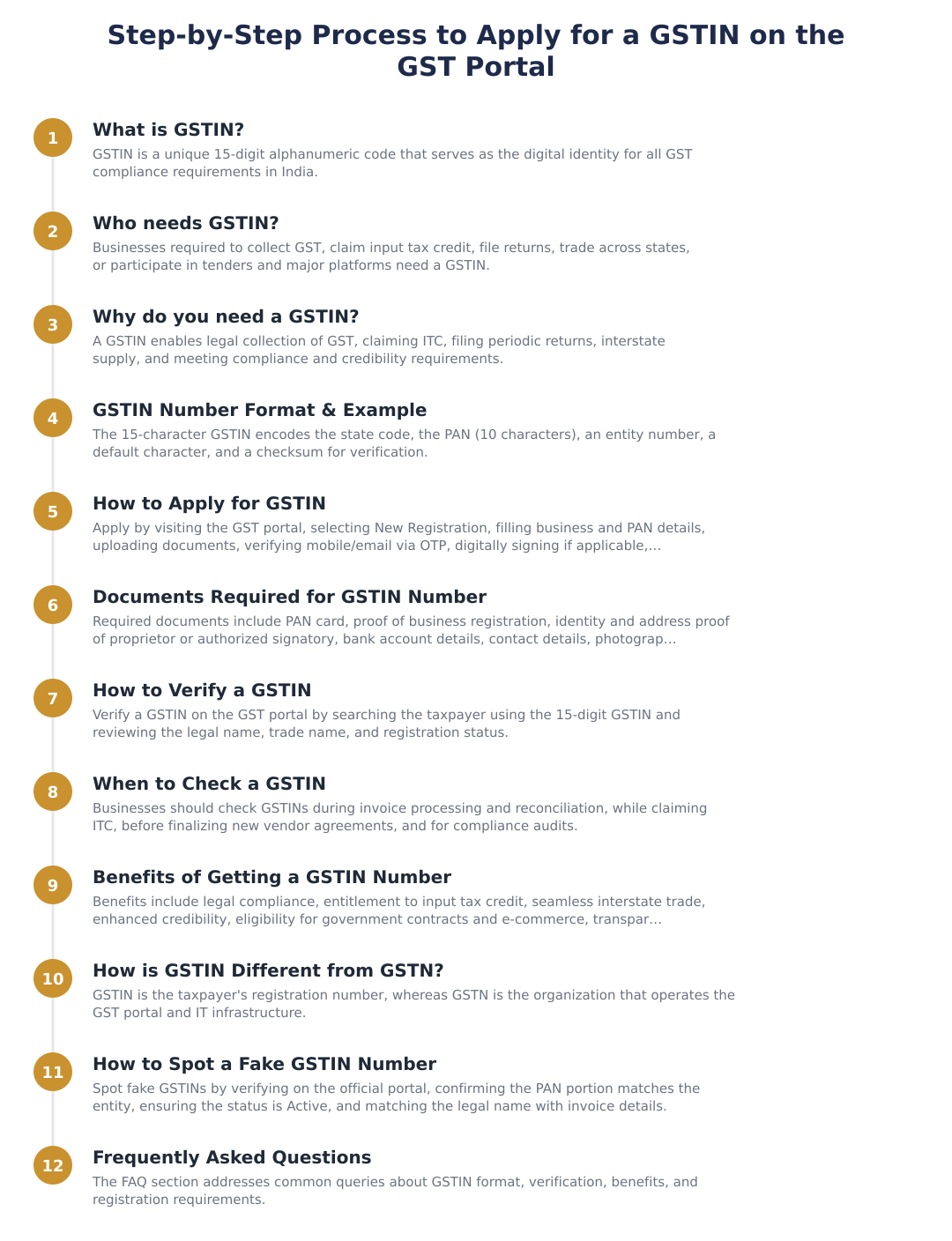
What is GSTIN?
GSTIN is a unique 15‑digit alphanumeric code that serves as the digital identity for all GST compliance requirements in India. It functions as the primary identifier for taxpayers under the GST regime and is used on invoices, returns and other GST‑related records.
Having a GSTIN links a taxpayer’s GST obligations (returns, payments, invoicing) to a single, standard identifier, which simplifies electronic record keeping and enables the tax administration and other businesses to verify the registration status of a supplier or buyer.
Who needs GSTIN?
GST registration, and hence issuance of a GSTIN, is mandatory for persons or businesses who are required to register under GST law. This includes those who exceed prescribed turnover thresholds or are otherwise liable to register as per the law.
Practically, if your business falls into the categories that the GST law makes liable for registration, you must obtain a GSTIN so you can legally collect GST, file returns and comply with other GST obligations.
GSTIN Number Format & Example
The GSTIN format reveals vital information, including the state code, PAN, registration sequence, and a checksum for verification. The code is structured so different parts convey specific data about the taxpayer and the registration.
For example: the first two digits indicate the state code, '27' represents Maharashtra. The following ten characters correspond to the business’s Permanent Account Number (PAN). The 13th digit is the entity number, which shows the sequence of registration for the same PAN within that state. The 14th character is typically a default value (commonly 'Z'), and the 15th digit is a checksum used to verify the accuracy of the GSTIN.
How to Verify a GSTIN?
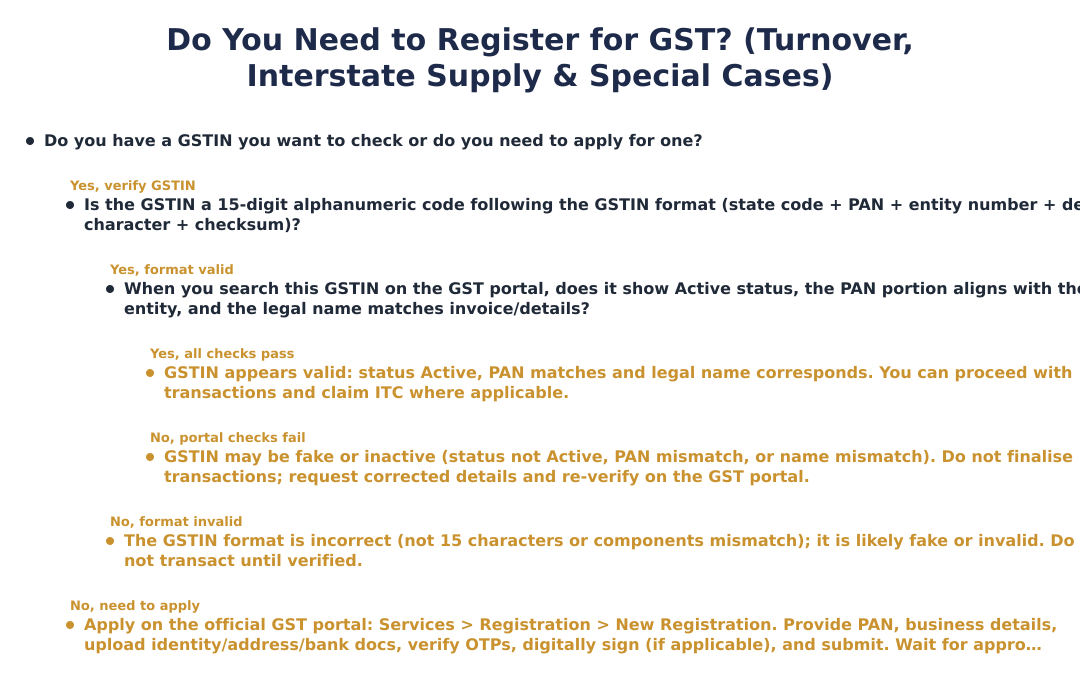
Open the official GST portal and navigate to the taxpayer search area to begin verification.
Choose the option to search by GSTIN on the portal’s Search Taxpayer page.
Input the full 15‑digit GSTIN number to retrieve the registration details.
Check the legal name, trade name and registration status shown on the portal to confirm validity before transacting.
Documents Required for GSTIN Number
| Document |
|---|
| PAN card |
| Proof of business registration (incorporation certificate or partnership deed) |
| Identity proof of authorised signatory (Aadhaar, passport, or voter ID) |
| Address proof |
| Bank account details (cancelled cheque or bank statement) |
| Mobile number and email for OTP authentication |
| Photographs of proprietor or authorised signatory |
| Jurisdiction details |
| Digital Signature Certificate (if applicable for companies and LLPs) |
Benefits of Getting a GSTIN Number
Obtaining a GSTIN enables a business to legally collect GST from customers, claim input tax credit on eligible purchases, and file the periodic GST returns required by the system. These capabilities are central to compliance and to avoiding downstream disputes or restrictions on input tax credits.
Beyond compliance, a GSTIN facilitates interstate trade, allows participation in tenders and onboarding on major platforms, enhances business credibility and transparency, and often improves access to finance because GST compliance supports the business’s documented turnover and transactional history.
GSTIN is the 15‑character identifier that forms the backbone of GST compliance in India. If your business is liable to register, secure the correct documents, register to obtain the GSTIN, and routinely verify other parties’ GSTINs via the official portal before major transactions. Doing so preserves your entitlement to input tax credit, supports smooth interstate trade and strengthens your firm’s credibility with customers, suppliers and lenders.
Frequently asked questions
What is a GSTIN number and what does it do?
A GSTIN is a unique 15-digit alphanumeric code that serves as the digital identity for a taxpayer under India's GST system. It is used for all GST compliance requirements including invoicing, filing GST returns, legally collecting GST from customers and claiming input tax credit (ITC). The GSTIN helps track supplies across the country and ties a business's PAN, state and registration details into one verifiable identifier. Having a GSTIN also enables participation in government tenders, listing on major e-commerce platforms and improved credibility with banks and vendors.
Who needs to register and get a GSTIN?
Any business or person meeting the GST registration conditions prescribed by law must register and obtain a GSTIN. This typically includes businesses whose aggregate turnover exceeds the statutory threshold, persons making interstate supplies, casual taxable persons, e-commerce operators, and those required to collect tax at source; small businesses may opt for registration voluntarily to claim ITC. Once registered, the taxpayer must comply with filing returns and other GST obligations or face penalties for non-compliance. Registration requirements vary by activity and turnover, so check the GST rules applicable to your business type.
What is the format of a GSTIN and can you give an example?
The GSTIN format is a 15-character code that reveals the state code, PAN, registration sequence, a default character and a checksum for verification. For example: '27ABCDE1234F2Z5' where '27' is the state code (Maharashtra), 'ABCDE1234F' is the PAN, '2' is the 13th digit showing the entity number for the PAN in that state, 'Z' is typically a default 14th character, and '5' is a checksum. This structure lets anyone quickly verify the PAN portion and the state jurisdiction and helps detect obvious mismatches between PAN and GSTIN. Always verify the full 15 digits on the GST portal before relying on a GSTIN for ITC or supplier onboarding.
How do I apply for a GSTIN on the GST portal step by step?
You apply for a GSTIN by completing the online registration process on the official GST portal under Services > Registration > New Registration and submitting required details and documents. The key steps are: fill in PAN and business/contact details, upload proof of identity/address and bank details, verify mobile and email via OTP, digitally sign the form if applicable, submit and wait for officer verification and approval. Once the application is approved by GST authorities, a unique 15-digit GSTIN is issued to the business. Processing times can vary, and companies/LLPs will generally need a Digital Signature Certificate (DSC) for submission.
What documents are required to get a GSTIN?
You need to submit identity and business-related documents such as PAN card, proof of business registration (incorporation certificate or partnership deed), identity proof (Aadhaar, passport or voter ID) and address proof (utility bill, rental agreement or property tax receipt). Additionally you must provide bank account details (cancelled cheque or bank statement), photographs of the proprietor/authorised signatory, jurisdiction details, a valid mobile number and email for OTP verification, and a Digital Signature Certificate for companies and LLPs if applicable. These documents are used to verify PAN, business address, bank account and the authorised signatory before GSTIN issuance. Missing or incorrect documents can delay registration or lead to rejection.
How can I verify a GSTIN is valid and active?
You can verify a GSTIN's validity and status by using the 'Search Taxpayer' -> 'Search by GSTIN' feature on the official GST portal and entering the full 15-digit GSTIN. The portal will show the legal name, trade name, registration status (Active/Inactive), taxpayer type, and principal place of business; check that the business name matches invoices, the PAN portion aligns with the entity and the status shows 'Active'. Verification is especially important before claiming input tax credit, onboarding vendors, reconciling invoices or entering interstate transactions. For repeated or bulk checks, trusted third-party tools like Clear GST search tools can also assist but always cross-check on the official portal for critical transactions.
What are the main benefits of obtaining a GSTIN for my business?
A GSTIN enables a business to legally collect GST, claim input tax credit (ITC) on purchases, file periodic GST returns and trade across state borders under a unified tax system. It enhances credibility with customers, suppliers and lenders, allows access to government tenders and e-commerce platforms, and improves transparency which can ease financing and compliance. Registered businesses also reduce tax leakage and avoid severe penalties, non-registration when liable can attract penalties up to Rs 10,000 or the tax amount due, whichever is higher. Overall, GSTIN registration supports both regulatory compliance and commercial growth when the business meets the eligibility criteria.
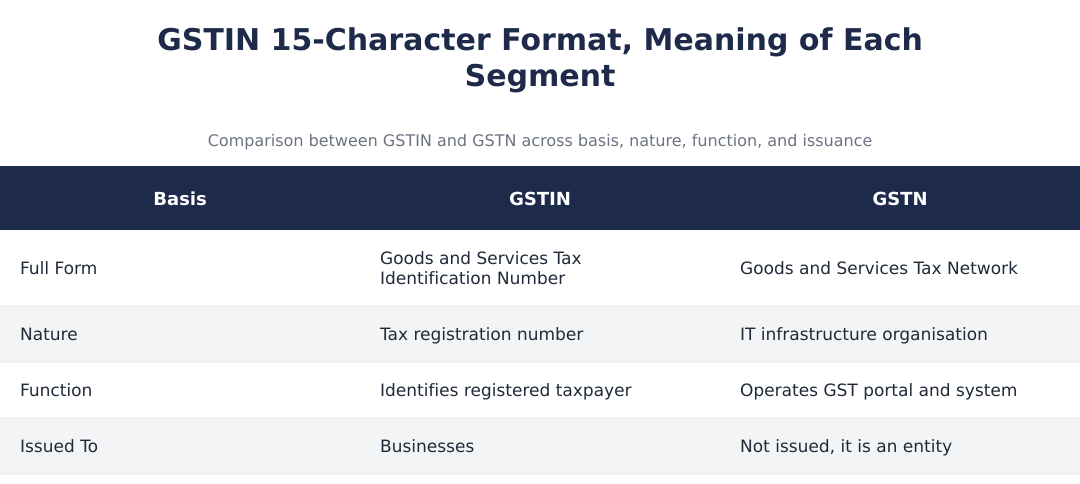
How is GSTIN different from GSTN?
GSTIN is the taxpayer's 15-digit registration number used for GST compliance, whereas GSTN (Goods and Services Tax Network) is the IT infrastructure organisation that operates the GST portal and the system. GSTIN is issued to businesses after registration to identify the taxpayer for filing returns and invoicing, while GSTN is not issued to taxpayers, it provides the technology backbone and maintains the portal used by taxpayers and authorities. In short, GSTIN identifies the taxpayer; GSTN runs the online system those taxpayers use. Having a GSTIN doesn’t imply any administrative role in GSTN, it’s simply the registration identifier recorded on the GSTN-operated portal.
How do I spot a fake or misused GSTIN before making payments or claiming ITC?
To spot a fake or misused GSTIN, verify the full 15-digit number on the official GST portal and confirm the PAN portion matches the entity, the registration status is 'Active', and the legal name and address align with the invoice. Also check taxpayer type (regular/composition) and recent filing consistency where possible; mismatches in any of these fields are red flags and you should not proceed until clarified. Remember that completely fabricated GSTINs are rare but inactive, cancelled or misused numbers occur, using them can trigger ITC reversals and compliance notices. If in doubt, request documentary proof from the supplier and re-verify on the GST portal before finalising the transaction.
Need help staying GST compliant?
MoneyGence's AI Finance OS tracks your compliance, wallet share, and finances in one place, built for agencies and growing businesses.
Get started with MoneyGence