Consultancy Agreement - Sample Template & Key Provisions
A well-drafted consultancy agreement sets expectations between a company and an external consultant, reducing misunderstandings and legal risk while improving the chances of successful delivery. In this guide you will learn what core clauses typically appear in a consultancy agreement, why each clause matters in practice, and practical drafting considerations to protect both the hiring company and the consultant. Whether you are engaging a specialist for a short project or retaining ongoing advisory services, understanding how to frame the scope of work, payment mechanics, confidentiality, intellectual property, and termination rights will help you create an agreement that is clear, enforceable, and fair. This guide focuses on principles and drafting tips that apply across sectors and sizes of engagement, helping business owners, in‑house counsels, and independent consultants spot common pitfalls and negotiate terms more confidently. You will also get practical suggestions on how to allocate risk, manage deliverables and milestones, and preserve flexibility without sacrificing clarity.
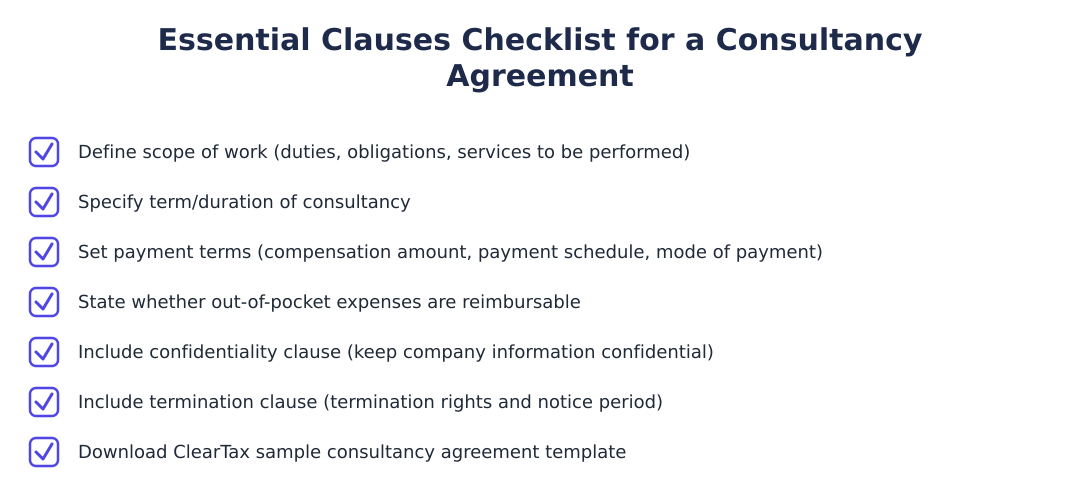
Scope of work
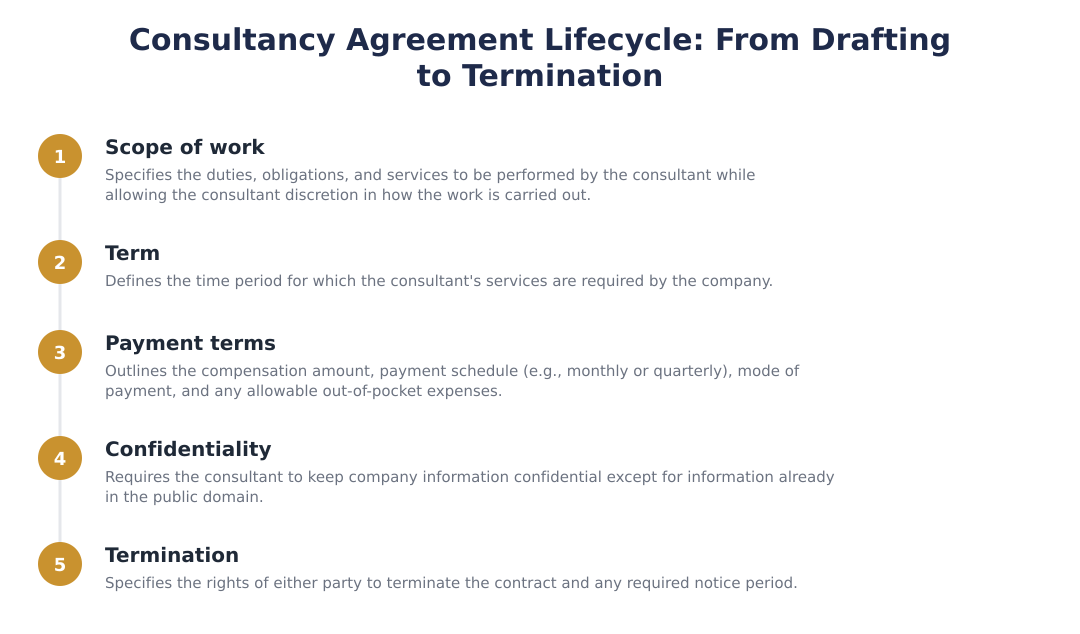
The scope of work clause defines what the consultant is being engaged to do. A clear scope describes the specific services, outputs or deliverables, any performance standards, and the intended outcomes. When the scope is too vague, parties later dispute whether particular tasks were included, which can lead to scope creep or unpaid extra work.
Best practice is to be as specific as reasonably possible about deliverables and to include mechanisms to handle changes: for example, a requirement that additional work be approved in writing, or an agreed process for preparing and pricing change orders. If methods of work are deliberately left to the consultant’s discretion, the agreement should state that the consultant has control over means and methods while still meeting agreed results and timelines.
Term and duration
The term clause sets the engagement start date and either a specific end date or conditions that will end the engagement (for example, completion of a project or achievement of milestones). It can also provide for automatic renewal or extensions if both parties intend an ongoing relationship.
When negotiating term, consider practical matters such as handover responsibilities at the end of the term, any post‑engagement duties (like concluding reports) and how unfinished work will be treated. Where a fixed term would be unduly rigid, consider defining services on a milestone basis or using a rolling term with termination rights for added flexibility.
Payment terms and expenses
Payment terms should state the fee structure (fixed fee, hourly/day rate, retainer or milestone payments), the timing of payments (for example, monthly or on completion of milestones), invoicing requirements and accepted modes of payment. Clarity avoids disputes over late payments, scope-related fee adjustments, or withholding.
If the consultant will incur out‑of‑pocket expenses, the agreement should specify which expenses are reimbursable, any pre‑approval process required, and documentation necessary for reimbursement. Include provisions for interest or consequences of late payment if that is important to the parties, and consider linking milestone payments to acceptance procedures to protect the hiring party against incomplete deliverables.
Confidentiality and intellectual property
A confidentiality clause protects non‑public information exchanged during the engagement. It should define what constitutes confidential information, state permitted uses, and set the duration of confidentiality obligations. Carve-outs for information already in the public domain or independently developed by the consultant help keep the obligation reasonable.
Intellectual property (IP) provisions determine who owns work product created during the engagement. Parties commonly agree either to assign IP to the hiring company or to license it. Practical drafting should address ownership of pre‑existing materials, moral rights (if applicable), and any obligations to deliver source files or documentation needed for the client to use the deliverables after the engagement ends.
Termination and notice
Termination clauses explain how either party can end the agreement and the notice required. Typical options include termination for convenience with prior notice and termination for cause where one party breaches material obligations and fails to cure within a defined period. Clear termination rights reduce the risk of abrupt exits and help manage winding down work.
The clause should also address consequences of termination, such as final payments, return of confidential materials, transition assistance, and survival of certain obligations (confidentiality, IP rights, indemnities). Practical additions include specifying timeframes for final deliverables and handover duties to minimise disruption when a consultancy ends.
A well-drafted consultancy agreement balances clarity and flexibility: it defines what will be delivered and how, while providing practical mechanisms to manage change and protect both parties’ interests. Focusing on precise scope, sensible payment mechanics, clear confidentiality and IP rules, and fair termination provisions will reduce disputes and make the working relationship productive. Use this guide as a checklist when negotiating or reviewing a consultancy agreement, and consider seeking legal review for complex or high‑value engagements.
Frequently asked questions
What is a consultancy agreement and why is it important?
A consultancy agreement is a written contract that sets out the duties, payment, duration, confidentiality and termination terms between a company and a consultant. It is important because it clearly defines the scope of work and expectations, protects confidential company information, specifies payment terms and timelines, and provides mechanisms for ending the relationship, reducing disputes and legal risk. By documenting these elements, such as scope of work, term, payment schedule, confidentiality obligations and notice for termination, the agreement helps both parties understand their rights and obligations and provides legal enforceability if issues arise. Companies often use standard templates (like the ClearTax sample) to ensure all key clauses are covered consistently.
What should be included in the scope of work in a consultancy agreement?
The scope of work in a consultancy agreement should list the specific duties, obligations and services the consultant will perform while allowing the consultant discretion over methods of work. It should describe deliverables, milestones, timelines and any exclusions so there is no confusion about responsibilities; however, it typically does not prescribe the detailed methods the consultant must use. Clear, measurable scope items reduce disputes over performance and help determine whether additional work requires a contract amendment or separate agreement.
How is the term of a consultancy agreement defined?
The term of a consultancy agreement is the specific time period for which the consultant’s services are engaged and is stated in the contract. It should indicate a fixed start and end date or specify that services continue until a particular milestone or termination event, and may include provisions for renewal or extension. Including the term clarifies expectations on duration of services and interacts with notice and termination clauses if either party wants to end the relationship early.
What payment terms are typically included in a consultancy agreement?
Payment terms in a consultancy agreement specify the amount of compensation, frequency of payment (monthly, quarterly, per milestone, etc.), payment method, and whether out-of-pocket expenses are reimbursable. The contract should also state invoicing procedures, any withholding or taxes, late payment interest and conditions for withholding payment due to disputed work. Clear payment terms help avoid cash-flow disputes and ensure both parties know when invoices are due and what supporting documents are required for reimbursement of expenses.
What confidentiality obligations are included in a consultancy agreement?
A consultancy agreement typically requires the consultant to keep company information confidential and not disclose it except information already in the public domain. Confidentiality clauses define what constitutes confidential information, the duration of the obligation (often during and after the term), permitted disclosures (e.g., court order), and consequences for breach. Strong confidentiality provisions protect trade secrets, client lists and proprietary processes while allowing limited exceptions and specifying return or destruction of confidential materials on termination.
What termination clauses should be in a consultancy agreement?
Termination clauses should state each party’s right to end the contract, required notice periods, grounds for immediate termination (such as material breach or insolvency), and post-termination obligations like final payments and return of confidential materials. The agreement should specify whether termination triggers any severance, payment for work-in-progress, or liquidated damages, and how disputes about termination will be resolved. Clear termination terms reduce uncertainty and set expectations for winding up the engagement professionally and legally.
How can a consultancy agreement clarify whether a consultant is an independent contractor or an employee?
A consultancy agreement can explicitly state that the consultant is an independent contractor and not an employee, clarifying that the consultant controls their methods of work and is responsible for their own taxes and benefits. The contract should include clauses on lack of entitlement to employee benefits, no authority to bind the company, and responsibility for statutory compliances like income tax and professional tax. Properly drafted clauses and the actual working relationship together help demonstrate independent status for tax and employment law purposes, though authorities may still examine substance over form.
Should intellectual property (IP) created by the consultant be addressed in the consultancy agreement?
Yes, a consultancy agreement should address ownership and assignment of intellectual property created during the engagement, typically specifying whether the company owns the IP or the consultant retains rights. The contract can require the consultant to assign all rights in work product to the company, grant a license, or reserve certain background IP, and may include warranties of non-infringement. Clear IP clauses avoid later disputes over the use, modification or commercialization of deliverables and should specify any moral rights, attribution and post-termination use rights.
Where can I get a sample consultancy agreement template to use for my business?
You can download a sample consultancy agreement template from the ClearTax resources page referenced by this guide, which provides a standard contract covering scope, term, payment, confidentiality and termination clauses. Sample templates typically include editable clauses you can adapt to your specific services, payment structures and jurisdictional requirements, but you should modify them to reflect your agreed commercial terms and have them reviewed by a lawyer for legal compliance. Using a template speeds up drafting and ensures key protections are included, though customization is essential for specific engagements.
Need help staying Finance Templates compliant?
MoneyGence's AI Finance OS tracks your compliance, wallet share, and finances in one place, built for agencies and growing businesses.
Get started with MoneyGence